|
DiscoverCircuits.com -- Hobby Corner
Last Updated on:
Friday, December 29, 2017 05:52 AM
Hobby Circuits List
The contents &
graphics of Discovercircuits.com are copyright protected.
LINKING to Dave's circuits is permitted but DO NOT COPY any files to your WEB
SITE server |
 |
|
|
|
|
|
|
More
Infrared Circuits |
|
Color Film Negative Makes Visible
Light Blocking Filter
|
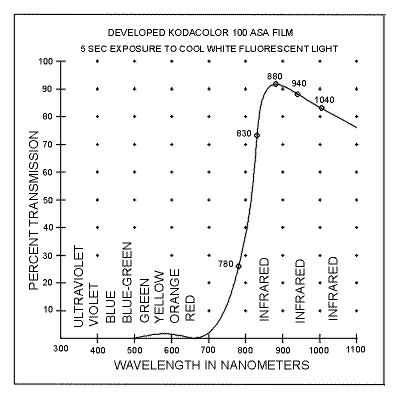
This isn’t an electronic circuit but the file shows the curve for an optical filter
made from exposed color film. The material blocks most visible light but is very
transparent to 880nM infrared light. Kodak 100ASA is exposed to "cool white"
fluorescent light for about 5 seconds. Then, the film is developed in the usual way.
The color negatives form the filter material and does a fine job of blocking visible
light wavelength and passing the longer near infrared wavelengths. |
|
| This
isn’t an electronic circuit but the drawing below shows the curve for an optical filter
made from exposed color film. The material blocks most visible light but is very
transparent to 880nM infrared light. Kodak 100ASA is exposed to "cool white" fluorescent
light for about 5 seconds. Then, the film is developed in the usual way. The color film
negatives form the filter material and does a fine job of blocking visible light
wavelength and passing the longer near infrared wavelengths. |
| To minimize interference from room
lighting, optical communications receivers and some infrared TV camera systems will
often place an infrared low-pass filter in front of the light detector. The filters
are designed to block most of the visible light, allowing the near infrared light to
pass and reach the detector. However, glass filters, which are often used for such
applications, are expensive. A cheap
alternative is ordinary 35 mm photographic film that has been exposed to fluorescent
light and then developed. As shown in the attached figure, the color negative
produced after the photographic developing process has a sharp cut-off at about 830
nanometers and completely blocks most of the visible spectrum. The filter's
transmission is perfect for many near infrared LEDs and lasers with wavelengths
between 830 and 950 nanometers. Kodak Kodakcolor film with an ASA rating of 100
seems to work the best. A 5 second exposure to "Cool White" fluorescent light will
work do the trick. |
|
|
| Have
the film processor develop the film in the usual manner but not make any prints. The
color negatives become the filter material. A typical 36 exposure roll will cost only
about $5.00. The film can be easily cut into any size or shape that may be needed.
However, the film is not recommended for applications where it can become scratched or
exposed to moisture. |
|
Click on Drawing Below to view PDF version of Schematic |
|
 |
|
|
|
More
Infrared Circuits
Hobby Circuits List
eMail David A.
Johnson, P.E. about this circuit |